Chronic Viral Load Isn’t Just About Killing the Virus
MAVS, mitochondria, and why viral resilience depends on detection, signaling, timing, and recovery.

SECTION 1
The “What Kills It?” Problem
Most conversations about chronic viral load begin at the wrong end. Someone has recurrent flares, strange crashes after normal life stress, post-viral fatigue that never fully lifts, or labs that keep pulling the conversation back toward EBV, herpesviruses, or some other viral burden. Eventually, the question becomes obvious: what kills it?
That question makes sense. If a virus seems connected to the reason your body keeps falling apart, you are going to want it suppressed, cleared, contained, or gone. Nobody wants a philosophy lesson when they are exhausted, reactive, and waking up wondering why a normal week feels like too much. The desire for a direct antiviral answer usually comes from pain, failed explanations, and the need for something concrete.
The problem is that “what kills it?” skips the first layer of antiviral defense.
Long before a protocol can matter, infected cells need a reliable way to recognize viral material and turn that recognition into a usable alarm. The signal has to be strong enough to recruit help, accurate enough to avoid confusion, and controlled enough to avoid making the response itself more damaging than necessary.
That early layer is missing from most conversations about chronic viral load, from what I’ve seen. We talk about killing the virus as if the body is simply deciding whether to fight hard enough. A better starting point is detection: the body’s ability to notice the threat clearly enough to organize a response.
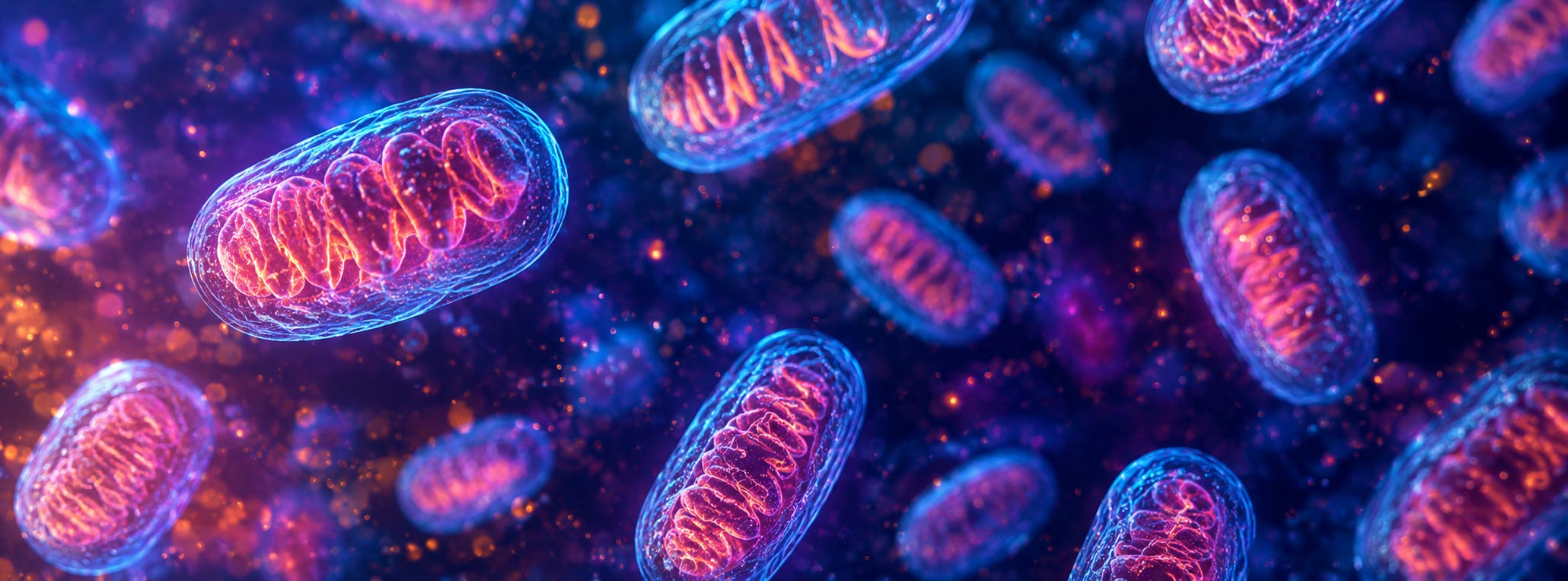
This is where MAVS becomes worth knowing. MAVS stands for mitochondrial antiviral signaling protein, which sounds more complicated than the basic idea. It is part of the cell’s early antiviral wiring. In practical language, MAVS helps turn viral RNA detection into interferon signaling, which is one of the ways infected cells warn the surrounding environment and push nearby cells toward antiviral behavior.
MAVS belongs far upstream of the usual conversations about herbs, drugs, immune support, etc. MAVS is part of the machinery inside the cell that helps determine whether viral material becomes a coordinated immune alarm.
Most people stumble into the world of mitochondrial health through their journey battling things such as chronic fatigue and perhaps other energetic issues. They hear about ATP, exercise tolerance, brain fog, slow recovery, and poor resilience. Those conversations are important, but they leave out part of the story. MAVS gives the immune side of mitochondrial biology a specific mechanism. Some of the same cellular structures people associate with energy also help organize early antiviral signals.
But this is also where we have to be careful. Once mitochondria enter the conversation, it is easy for people to turn a real mechanism into a grand explanation for everything. That is not what I am saying at all in this article. EBV reactivation, herpesvirus issues, post-viral fatigue, and low resilience cannot be reduced to one mitochondrial pathway. Biology is obviously going to be much more complex and messy than that.
The more useful lesson is that viral resilience depends on recognition, timing, signal quality, and recovery. The body has to notice the threat, respond with enough force to matter, and return to stability after the alarm has done its job.
SECTION 2
Before a Cell Can Respond, It Has to Notice
Pattern recognition shows up repeatedly in biology.
The body has sensors for this. Two of the major ones are called RIG-I and MDA5. The names matter less than the job: they help recognize viral RNA inside the cell before the infection has had time to spread quietly.
RIG-I and MDA5 are related, but they do different work. They recognize overlapping viral RNA patterns, which means different viruses and different cellular conditions can engage this system in different ways. Antiviral immunity works through timing, proportion, and context.
Delay gives the virus a head start, weak output may fail to contain it, and prolonged intensity can turn protective signaling into inflammatory noise. A useful immune response needs accuracy, proportion, and restraint. The body needs enough alarm to act, with enough control to stop.
That is one of the reasons “boost your immune system” is such a lazy phrase. A louder immune system is not automatically a better immune system. In chronic illness, people often get trapped between two crude explanations: weakness or overactivity. Real physiology is messier. Weak antiviral signaling and excessive inflammatory signaling can coexist. A body can fail to clear a threat cleanly while still producing plenty of symptoms.
Human genetics makes this point difficult to ignore in my opinion. Loss-of-function changes in IFIH1, the gene that encodes MDA5, have been linked with severe susceptibility to common respiratory RNA viruses in children. Gain-of-function changes in the same broader sensing pathway can drive excessive type I interferon activity. Both sides point to the same principle: antiviral signaling has to fit the moment.
Once that becomes clear, the chronic viral conversation matures. The thing to remember is that the response can break down at several layers: detection, signal translation, antiviral precision, inflammatory control, viral evasion, and resolution. MAVS sits right in the middle of that kind of question making it quite important.
SECTION 3
MAVS Is Where the Warning Becomes a Wider Alarm
When RIG-I or MDA5 detect viral RNA, recognition has to become communication. MAVS is one of the major handoff points.
The name sounds technical, but the job is not hard to understand. MAVS helps take the early warning from viral RNA sensors and turn it into a broader antiviral response. Once the signal reaches MAVS, the cell begins organizing downstream immune activity that can lead to interferon production and antiviral gene activation.
Interferons are part of the body’s early warning language. They help infected cells and nearby cells shift into an antiviral state. That signal can be protective, but it has to be timed well. Too little signal, too late, may give a virus room to spread. Too much signal, or signal that does not resolve, can become part of the inflammatory burden. Interferon is not “good” or “bad” by itself. It depends on timing, intensity, tissue context, and whether the body can eventually turn the alarm down.
The basic chain is simple enough to hold in your head:
viral RNA sensors engage MAVS —> MAVS helps organize the signal that leads toward interferons and antiviral genes.
But if we turn that into a pathway diagram too quickly, we miss the living reality of the cell.
MAVS exists inside the physical architecture of the cell. It is anchored to membranes and shaped by the organelles around it. Its location affects the way the signal is organized (this is important to realize for reasons that will be discussed later).
That is important to understand because the antiviral alarm is not being built in empty space. MAVS sits on living cellular structures that can be energized, stressed, fragmented, repaired, remodeled, or removed. If part of the signal depends on the condition of that cellular platform, then mitochondrial state becomes relevant for reasons that go beyond ATP. This does not prove that mitochondrial dysfunction causes chronic viral persistence in patients. However, it does indicate that the old idea that mitochondria only matter for energy is too small. MAVS also appears to work partly through assembly. When the pathway is activated, MAVS can form higher-order signaling structures that help propagate the antiviral response.
Chronic viral patterns are often reduced to viral load, activity status, or whether a substance can suppress the pathogen. Those variables are factors we should still consider, but they only describe one side of the problem. A virus exists inside a host with sensing systems, signaling pathways, inflammatory state, mitochondrial state, tissue context, stress chemistry, and recovery capacity. The same viral exposure may produce a very different response in a different terrain.
So the line has to be held carefully when we talk about multifaceted topics like MAVS. MAVS is a real antiviral signaling hub. Mitochondrial and organelle state can influence how that signal behaves. Many viruses care enough about this pathway to interfere with it directly. But that does not give us permission to claim that chronic EBV, herpesvirus reactivation, post-viral fatigue, or chronic viral persistence are simply caused by generic mitochondrial dysfunction. MAVS simply gives us a better map to navigate these more complex areas of physiology.
Viral defense depends on detection, signal organization, and cellular architecture. Some viruses target this immune wiring directly, which tells us the pathway matters without turning it into an explanation for everything.
The missing piece in many chronic viral conversations is recognition. The immune response begins when the body notices a threat clearly enough to organize the next move. Your cells cannot fight what they cannot detect.
SECTION 4
Where the Signal Gets Organized
Once viral RNA has been recognized, the cell still has to turn that warning into a coordinated response. MAVS is one of the places where that handoff happens, but it is not floating around as an isolated immune molecule. It sits in the physical architecture of the cell, close to organelles and membrane contact zones that shape how signals move. And remember… Proximity changes biology.
Proteins that gather in the same cellular area can interact differently than proteins scattered across the cell. Calcium movement, lipid handling, redox shifts, mitochondrial behavior, and stress signaling can all influence the environment where immune communication is being built. MAVS sits close to that overlap.
This is where the mitochondrial side of the story becomes more interesting than ATP alone. Most people stumble into mitochondrial health through fatigue, brain fog, exercise intolerance, slow recovery, or some general sense that their cells cannot keep up (which are all very valid concerns). But MAVS adds another layer: some mitochondrial-associated structures are also involved in organizing early antiviral signals.
The story also extends beyond mitochondria. MAVS has been found on peroxisomes, smaller organelles involved in lipid metabolism and redox biology. Peroxisomes rarely show up in everyday immune conversations, but they can participate in antiviral signaling too. In some settings, they appear to shape a different interferon pattern than mitochondrial MAVS.
Then there are mitochondria-associated membranes, or MAMs. These are contact zones where mitochondria sit close to the endoplasmic reticulum. The name is clunky, but the concept is important because these are places where multiple systems touch: mitochondrial function, calcium handling, lipid movement, stress signaling, and immune communication.
This gives us a more concrete version of the terrain idea. The antiviral response is not only about whether a virus is present or whether something can suppress it. The response is moving through a cellular environment with structure, stress, energy demands, repair systems, and signaling bottlenecks. If MAVS-related signaling is being organized around mitochondria, peroxisomes, and membrane contact sites, then the condition of those areas can influence the quality of the alarm.
This also sets up the next major piece: viral immune evasion. Hepatitis C is one of the clearest examples because it can interfere with MAVS signaling around the mitochondria-associated membrane region. That’s important to realize because some viruses do more than survive the immune response after it starts. They can also interfere close to the beginning, around the machinery that helps the alarm get organized.
For someone dealing with chronic viral patterns, this changes the question. We are not only asking whether a virus is present, active, suppressed, or elevated on a lab report. We are also asking what kind of cellular terrain the signal has to move through.
SECTION 5
The Condition of the Platform Matters
By this point in the article, mitochondrial health has moved out of the energy-only frame. No more. MAVS gives the conversation a more specific reason to care about the state of the organelle area where early antiviral signaling is being organized.
Let’s start with membrane potential for example. Mitochondria maintain an electrical gradient that helps drive ATP production, which is why this topic usually shows up in energy conversations. But experimental MAVS work also shows that when this gradient is disrupted, the antiviral response can weaken.
The takeaway here is narrow but important. Mitochondrial state can affect immune signaling. That does not mean a person with fatigue automatically has poor MAVS signaling, and it does not mean low energy equals poor viral defense. It means mitochondria are involved in the quality of the signal, not only the amount of energy a cell can produce.
Mitochondrial shape adds another layer. Mitochondria are constantly changing. They connect, divide, stretch, fragment, and reorganize based on what the cell needs. In the RIG-I/MAVS pathway, a more connected mitochondrial network can support stronger antiviral signaling in some experimental settings, while excessive fragmentation can weaken the response. That can be easy to oversimplify though. Fusion is not always good. Fission is not always bad. Healthy cells need both. The better question is whether the mitochondrial network can stay organized under stress. A cell dealing with viral pressure needs more than fuel. It needs enough structure to communicate well.
Redox biology deserves the same restraint. In chronic illness spaces, oxidative stress is often treated like something to eliminate as aggressively as possible (this is not a goos thing). Sometimes that instinct makes sense. Excessive oxidative stress can irritate tissue, drain repair capacity, and feed inflammatory patterns. But immune signaling also uses redox chemistry. A small, local redox shift can help a message move. A body flooded with unmanaged oxidative stress is a different situation.
MAVS sits inside that nuance. Redox state can influence antiviral signaling, but timing, intensity, location, and context decide whether that signal is useful or damaging. The cell may need a controlled spark. It does not need a fire spreading through the whole building.
Mitophagy brings in the cleanup side to the picture. Cells use mitophagy to remove mitochondria that are damaged or no longer useful. Most people think of this as mitochondrial quality control, which is true. In the MAVS story, though, cleanup can also affect communication. If mitochondria help organize part of the antiviral signal, then removing or remodeling them can change the environment where that signal is being built.
That can help the cell reset when damaged mitochondria need to be cleared. It can become more complicated when viruses manipulate the process, or when the cleanup response changes the same structures involved in antiviral communication.
So I would not turn this into “bad mitochondria cause chronic viruses.” The evidence cannot carry that. What it can carry is more precise anyways: mitochondrial state can influence MAVS-related signaling in experimental systems, which makes mitochondrial health relevant to antiviral signal quality.
That matters for chronic viral patterns, but it does not prove that generic mitochondrial dysfunction causes chronic EBV, herpesvirus reactivation, post-viral fatigue, or broad viral persistence in people. MAVS gives us a more disciplined way to talk about terrain. The body’s antiviral response depends on detection, structure, timing, and recovery. Mitochondria are part of that conversation, but they are not the whole conversation.
SECTION 6
Viruses Know Where the Wiring Is
If this wiring matters to the host, it matters to the virus.
Viruses do not need to overpower the entire immune system to gain an advantage. They often need something much smaller: enough time to replicate before the host gets organized. One way to buy that time is to interfere early, before the infected cell has clearly warned the cells around it.
MAVS sits near that early warning layer. It helps connect viral RNA detection to the wider antiviral response, which makes it useful to the host and inconvenient for the virus. When that signal gets disrupted, the infected cell may still recognize that something is wrong, but the message moving outward can become weaker, later, or less coordinated.
Hepatitis C is the cleanest example because it does something blunt. HCV carries a viral protease called NS3/4A. A protease is basically a cutting tool, and MAVS is one of the things it can cut. When MAVS is cut, the early signal that would normally help drive interferon gets disrupted.
For a virus known for persistence, that is a serious advantage. The story is not simply that hepatitis C is “strong” or that the immune system is “weak.” Part of the story is that the virus can interfere with one of the body’s early alarm systems.
Earlier, we talked about MAVS sitting around mitochondria, peroxisomes, and the contact zones between mitochondria and the endoplasmic reticulum. Hepatitis C makes that location significant in a very concrete way. It has been shown to target MAVS in those contact-zone areas, which means the virus can interfere near the place where part of the immune response is being organized.
HCV is the best example for this article, but it is not a universal template. Other viruses have been studied in the MAVS neighborhood too, including influenza, dengue, SARS-CoV-2, and EBV. Each one has its own biology, so flattening all of that into “viruses block MAVS” would be sloppy. The more honest version is that MAVS sits in a region of antiviral signaling that multiple viruses have found worth disturbing.
Since I brought up EBV, I am going to provide an extra note on that due to how popular of a topic this is. A lot of readers will hear EBV and immediately run it through their own history: reactivation labs, fatigue, swollen glands, neurological symptoms, crashes after stress, or years of being told they have “chronic EBV.” There is experimental evidence connecting EBV biology to MAVS targeting. One mechanism involves an EBV protein called BILF1 and the degradation of MAVS.
That finding most definitely belongs in the conversation. It shows that MAVS is not irrelevant to herpesvirus biology. But it cannot carry the claim that someone’s EBV reactivation is mainly caused by poor mitochondrial health, weak MAVS signaling, or generic mitochondrial dysfunction. EBV latency and reactivation are bigger than one pathway. They involve immune surveillance, stress physiology, inflammation, viral gene expression, tissue context, and the resilience of the host.
This is where health writing often betrays sick people. A real mechanism gets found, and within five minutes it becomes the master key. One pathogen explains the whole illness. One pathway explains the whole immune system. One supplement category supposedly fixes the pathway.
MAVS should not become another version of that.
Its value is more precise. It helps explain why chronic viral patterns cannot be reduced to viral load, direct suppression, or the question of what “kills” the virus. The body also has to recognize the threat, organize the message, control the inflammatory spillover, and recover after the response has done its job.
Killing, suppressing, or containing a virus may matter. But if the alarm is delayed, distorted, or interrupted, then the problem is not only the presence of the virus. It is the quality of the host response around it.
MAVS gives us one clear place where the viral story and the mitochondrial story meet.
The next question is how far we can responsibly take this in real people.
SECTION 7
What This Does and Does Not Prove in People
Mechanisms can be seductive, especially when they finally give language to something people have felt for years. If someone has lived through recurring viral crashes, strange immune flares, low resilience, or post-viral fatigue, it is natural to want a clean explanation. MAVS can feel like that kind of explanation because it connects so many pieces that usually get separated: viral sensing, mitochondria, interferon signaling, redox state, organelle stress, and viral immune evasion.
But a mechanism is not the same thing as a diagnosis.
The human evidence currently is strongest around the broader MDA5-MAVS pathway. MDA5 is one of the viral RNA sensors upstream of MAVS, and changes in the gene that encodes it, IFIH1, show how important this sensing layer can be. When that pathway is impaired, antiviral defense can suffer. When it is overactive, interferon signaling can become excessive and damaging.
The body does not benefit from an immune system that is simply louder. It needs a response that fits the moment. Too little antiviral signal can leave the host vulnerable. Too much signal, especially when it becomes chronic, can become its own source of injury.
This matters in particular for how we talk about chronic illness. Many people are told they are either immunocompromised or inflamed, as if those are opposite categories. In real physiology, they can overlap. A person can have poor antiviral precision and still have plenty of inflammation. They can struggle to resolve infections cleanly while also feeling like their body is stuck in an alarm state.
MAVS helps make that idea easier to understand, but it still does not prove that every chronic viral pattern comes from this pathway. The direct human evidence around MAVS itself is much thinner than the broader MDA5-MAVS axis. There are human genetic and association findings worth paying attention to, but they are not strong enough to turn MAVS into a routine explanation for complex chronic illness.
The same caution applies to mitochondria. We have good reason to say mitochondrial state can influence MAVS-related signaling in experimental systems. We have reason to care about membrane potential, mitochondrial dynamics, redox tone, mitophagy, peroxisomes, and MAMs. Those are real pieces of the biology. What we do not have is proof that generic mitochondrial dysfunction broadly causes chronic viral persistence in people.
This means we should not say that mitochondrial dysfunction is the hidden cause of chronic EBV. We should not say that herpesvirus reactivation is mainly a MAVS problem. We should not say that post-viral fatigue is explained by failed mitochondrial antiviral signaling. We should not imply that mitochondrial support has been proven to restore MAVS-dependent viral clearance in patients.
Those claims may sound appealing because they create a clean storyline. They are also more than the current evidence can carry.
The better interpretation is more careful and more useful. MAVS gives us a biological reason to take the host terrain seriously. It shows that antiviral defense depends on sensing, signal organization, timing, cellular architecture, and resolution. It helps explain why the body’s response to a virus can be shaped by more than the virus itself.
For the person dealing with chronic viral patterns, that means the question gets broader without becoming vague. We are still interested in the virus. We are still interested in viral activity, viral history, immune memory, and whether the body is under ongoing infectious pressure. But we are also interested in the state of the host: whether the threat is being detected clearly, whether the response is well-timed, whether inflammation is controlled, whether recovery is happening, and whether the system can return to stability after the alarm has done its job.
That is the honest place to land. MAVS is relevant because the broader pathway matters in human antiviral defense. It is not a standalone explanation for chronic viral illness. It gives us a sharper lens rather than providing us with a final answer.
And that lens points us back to the question we started with: what if “killing the virus” was never enough of a framework?
SECTION 8
The Better Question Is Not Just “What Kills the Virus?”
By this point, the original question should feel incomplete.
“What kills the virus?” can still matter. Direct antiviral strategies, immune support, pathogen burden, and viral activity all have their place. I am not arguing for some soft version of health where the virus never matters and everything gets reduced to stress, mindset, or vague “terrain” language.
The virus matters.
But the host matters too.
A cell has to recognize viral material before it can respond to it. That recognition has to become a signal. The signal has to move through real cellular structures. Mitochondrial state, peroxisomes, membrane contact sites, redox tone, mitophagy, and interferon timing can all shape the quality of that response. Then, even if the alarm is triggered well, the body still has to control the intensity and come back down afterward.
That is a very different conversation than simply asking what substance suppresses a pathogen.
A lot of people with chronic viral patterns get trapped between two bad options. One side dismisses the viral layer because the labs are messy, the symptoms are nonspecific, or the person does not fit a neat diagnosis. The other side chases the virus endlessly, adding stronger and stronger antiviral tools without asking whether the body is actually organizing the response well.
Neither approach is enough.
MAVS helps clarify why. It gives us a specific example of how viral defense depends on sensing, signaling, cellular architecture, and timing. It also shows why mitochondria belong in the antiviral conversation without turning mitochondrial health into a magic explanation for every chronic viral problem.
That balance matters. If we overstate the mechanism, we create another trap. People will start saying chronic EBV is a MAVS problem, herpesvirus reactivation is a mitochondrial problem, or post-viral fatigue is proof of failed antiviral signaling. The evidence does not support that level of certainty.
But if we ignore the mechanism, we miss something important. The body’s response to a virus is not only determined by the virus. It is also shaped by the condition of the host and the quality of the signal.
That is the systems physiology lens.
It asks better questions.
Is the body recognizing the threat clearly?
Is the antiviral signal strong enough to matter?
Is interferon timing appropriate, or is the system stuck in a noisy alarm state?
Is inflammation helping contain the problem, or has it become part of the burden?
Are mitochondria only being treated as energy producers, or are we also thinking about them as part of the signaling environment?
Is the body recovering after the response, or does every stressor keep pulling it back into the same loop?
Those questions do not replace the viral conversation. They deepen it.
This is also the difference between chasing interventions and building a case. A protocol asks, “What should I take?” A systems process asks, “What is the body trying to do, where is it failing, where is it overcorrecting, and what would help restore coordination?”
That is the kind of thinking chronic illness usually requires. Not because every case is complicated for the sake of being complicated, but because the body is not a pile of disconnected parts. Viral pressure, immune signaling, mitochondrial state, stress physiology, sleep, nutrition, inflammation, tissue repair, and recovery capacity all influence each other.
MAVS is not the whole story.
It is one doorway into a better story.
Your mitochondria are not only relevant when you are tired. Your immune system is not only relevant when you are acutely sick. And chronic viral patterns are not always solved by finding the next thing that “kills” the virus.
Sometimes the more important question is whether the body can hear the alarm, organize the response, and return to stability when the threat has passed.
That is where the real work begins.
Holy shit its retard day here on SS. There is no such thing as virus. This is whst makes people sick